VCST: Creative Changemaking in Action Conference
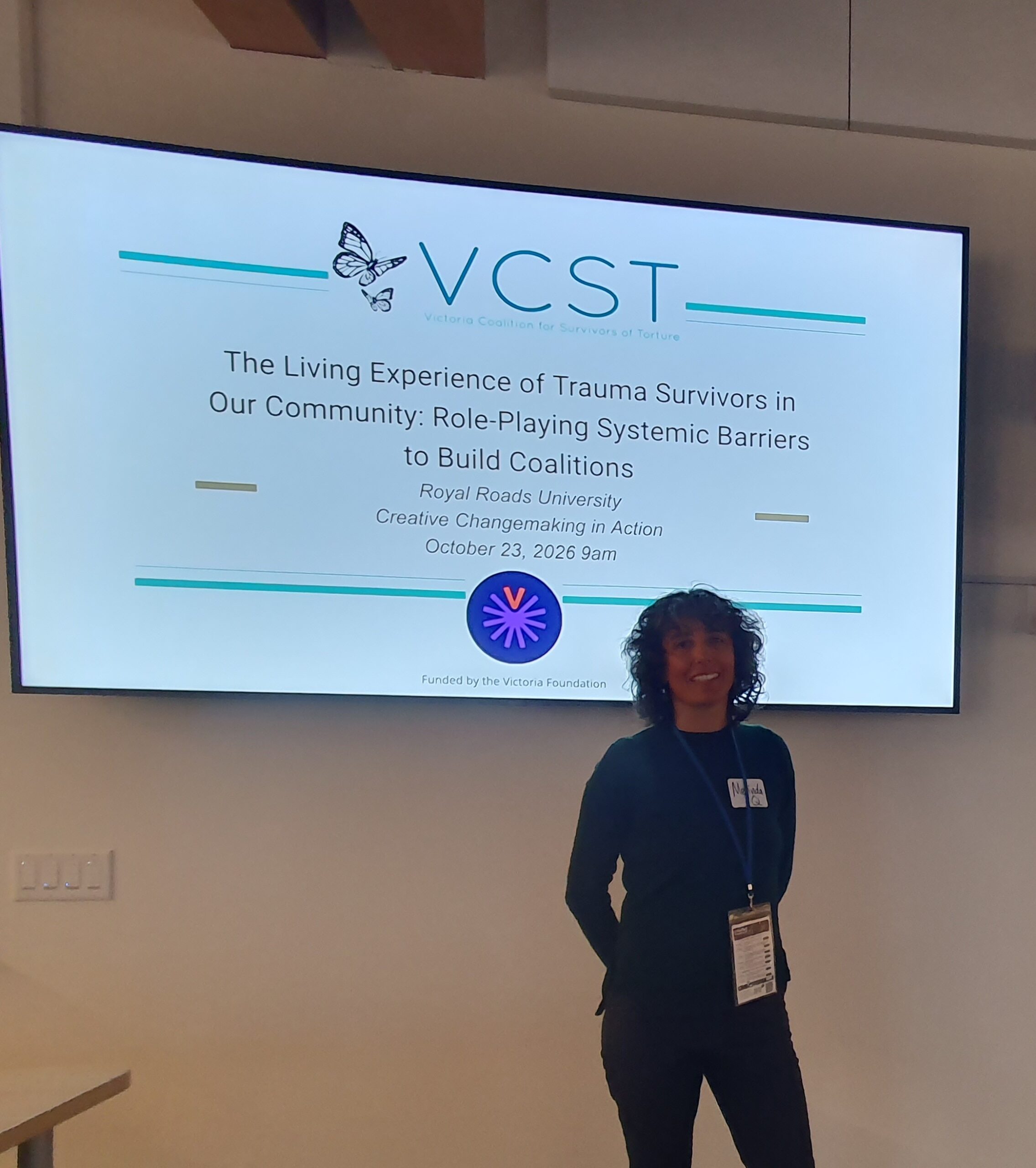
In October, I had honour of presenting a new VCST workshop in the Royal Roads University Creative Changemaking in Action Conference. This workshop combines our “Understanding Torture” workshop with a new participatory, empathy-building role-play activity. With the support of Jenna Stehelin, we guided 40 participants through discussion, role play and reflection to raise awareness about the presence of survivors of torture and their families in our communities.
Álvaro and I developed this concept over the last year to expand the reach of our Interconnectedness Initiative. Most of our workshops and seminars are presented to organizations and colleagues already within our network or interested to work with us. We started to brainstorm: How do we reach a broader audience to engage with VCST’s work? This Royal Roads conference was a perfect opportunity to showcase how the Interconnectedness Initiative is a force for creative changemaking through coalition building. At VCST, we see coalitions as essential for supporting the growth of more equitable communities for survivors and their families.
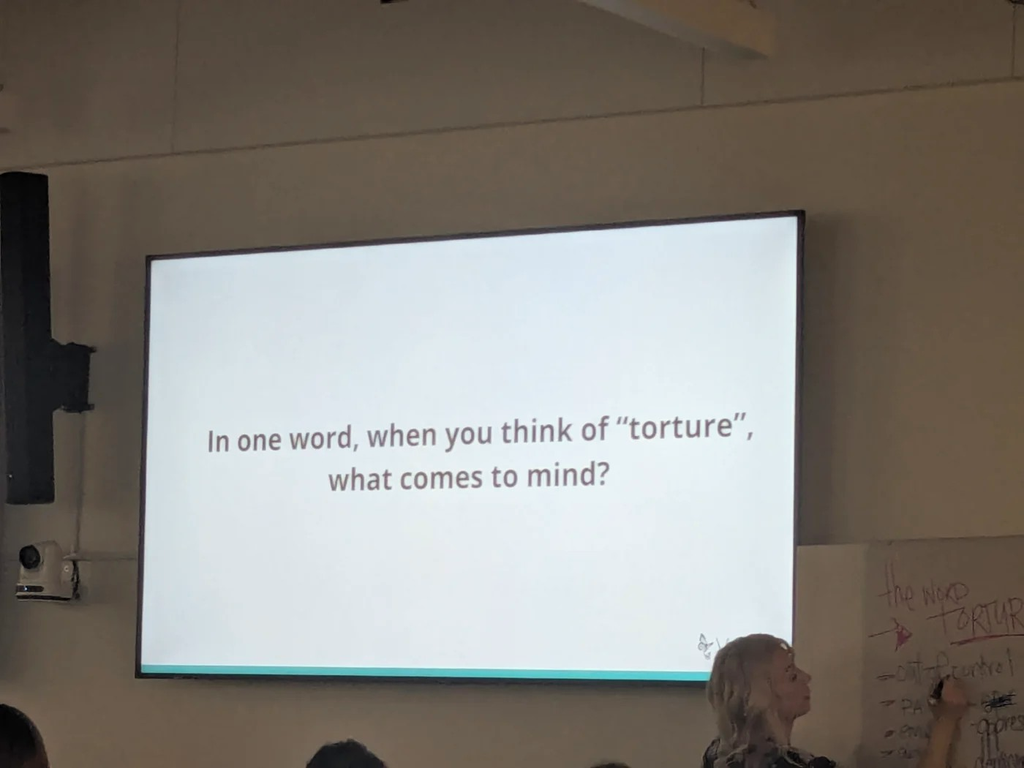
Volunteer assistant Jenna Stehelin writes participants’ responses to our first big discussion question: When you think of “torture”, what comes to mind?
This workshop grew from our “Understanding Torture” workshop that we offer for free to the community. We discuss the United Nations definition of torture and Canada’s role in ending torture, while presenting data about the estimated number of survivors on Vancouver Island. We also guide participants through discussion about systemic violence and torture and how these realities impact the lives of large communities of people.
Álvaro and I developed 5 role play scenarios representing systemic barriers to service access that survivors and their families encounter. The role plays include a community member (ie: a person seeking to use a service or get assistance) and a service provider (ie: the frontline worker offering the service). These role plays are intended to foster empathy for the community member, who carries a past history of trauma, as well as the service provider, who is often stretched thin, needing professional support and may be dealing with their own vicarious or personal trauma. In this way, empathy extends to both people caught in a difficult system. Participants volunteered to either be role players or active observers. Together, we experienced 2 role plays which inspired reflection and discussion among the group.
The role plays made the systemic barriers immediately visible to participants, who quickly connected their gut reactions and feelings with a sense of empathy for both characters. Our discussion focused on how both sides of the scenario struggle within systemic barriers while also identifying opportunities to support both.
Each role play ended with a guided breath and an invitation for gentle movement to release emotions brought up by the scenarios. This felt very important in the moment as I was moved to tears by the role players and scenarios! Even though Álvaro and I wrote the scenarios, watching them play out in real time brought up a feeling of urgency within me to break down those barriers. Many participants echoed this feeling, sharing how the scenarios inspired them.
Thank you to Amy Zidulka and Catherine Etmanski for their guidance and support in developing this workshop. Thank you to Jenna for her essential work to support the presentation. Many new connections were built that day and at the conference. We are thrilled with being given the opportunity to connect with the Royal Roads University community!
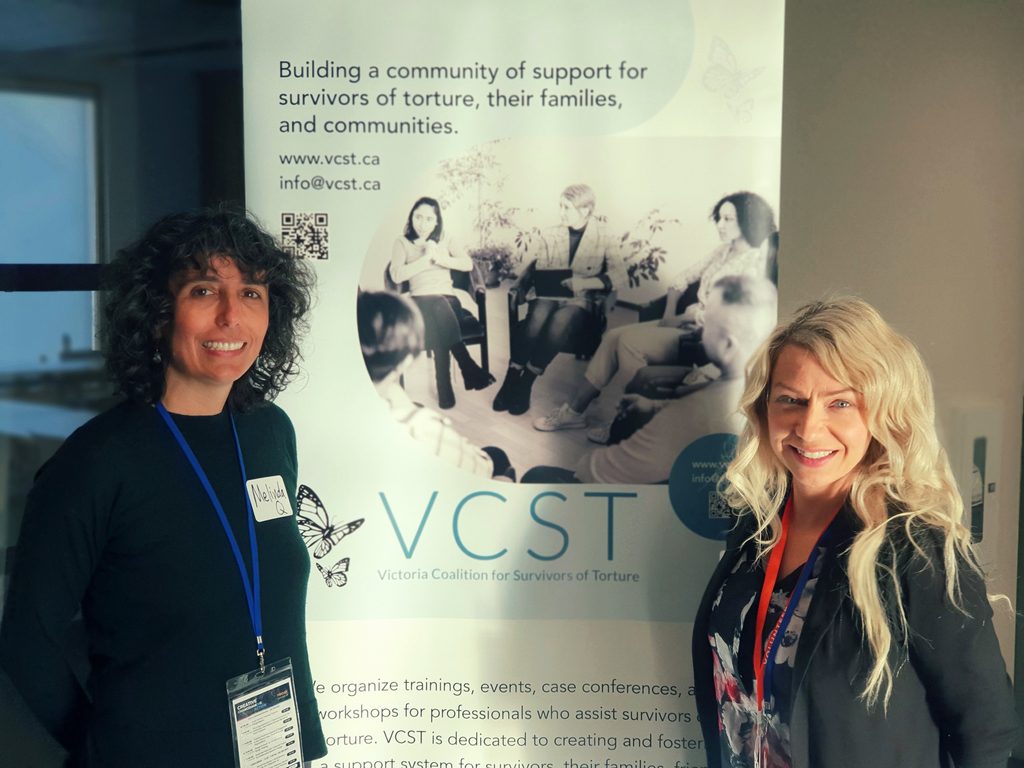
Me and Jenna at the RRU Creative Changemaking in Action Conference 2026.
The RRU Centre for Creative Changemaking showcases community work that builds toward “a world that is more equitable, connected, and joyful.” With an emphasis on relationship building, the Centre seeks to inspire and connect changemakers across disciplines and sectors.