
Interconnectedness Initiative
Coalition building for service agencies working with survivors
The Interconnectedness Initiative brings together 26 mental health, settlement and community agencies and services across Greater Victoria and the Lower Mainland to support survivors of torture and systemic violence and their families.
As a network of agencies and individuals responding to the needs of survivors, VCST’s Interconnectedness Initiative increases public awareness of survivors in our communities. Our participatory action research (PAR) informs sector-wide strategies for systemic change, while our collaborative professional events share knowledge, foster trust and build capacity within our community of member organizations.
Working in community
The agencies and organizations we’re proud to work alongside include:
- Vancouver Island Counseling Centre for Immigrants and Refugees (VICCIR)
- Victoria Immigrant and Refugee Centre (VIRCS)
- Inter-Cultural Association of Greater Victoria (ICA)
- Vancouver Association for Survivors of Torture (VAST)
- Central Vancouver Island Multicultural Society (CVIMS)
- Cowichan Intercultural Society (CIS)
- Greater Victoria Local Immigrant Partnership (GVLIP)
- Victoria Sexual Assault Centre (VSAC)
- Victoria Child Abuse Prevention & Counselling Centre (VCAPCC)
- School District 62
- Immigrant Services Society of BC (ISS of BC)
- Rainbow Refugee
- DIVERSEcity Community Resources Society (DCRS)
- Men’s Therapy Centre
Reports
Interconnectedness Initiative year in review, 2025-2026
VCST did much work this year in expanding our reach to include more communities of survivors.
Vicarious Trauma & Burnout Interviews Report
In March 2026, VCST conducted qualitative interviews with senior managers from five organizations that provide services to immigrants and refugees on Vancouver Island. These interviews are part of our long-term…
RECAP: Making healthcare more accessible for immigrants & refugees
A review of gaps and best practices in referral systems between settlement and healthcare/counselling agencies.
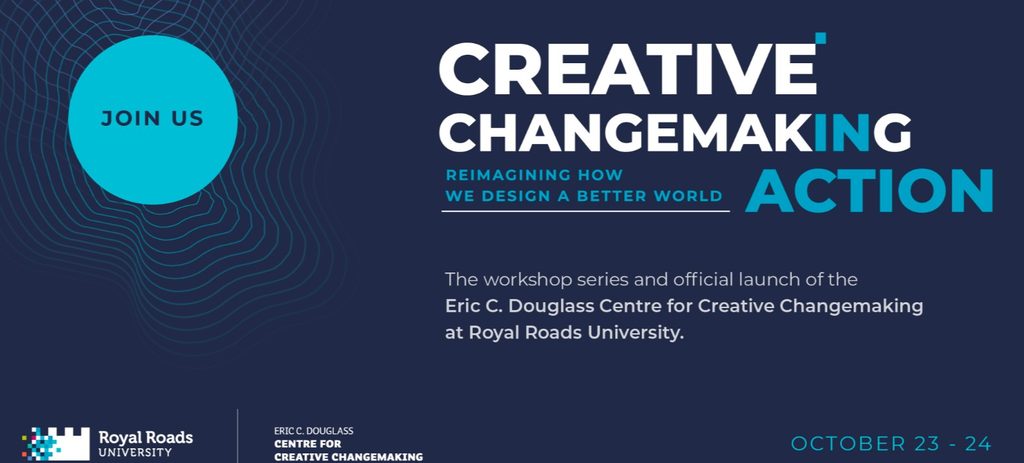
VCST to present at Centre for Creative Changemaking
VCST is excited to announce that we will be presenting a participatory workshop in the Royal Roads University Centre for Creative Changemaking inaugural conference! In the conference, we will debut…

Interconnectedness Initiative year in review, 2025-2026
VCST did much work this year in expanding our reach to include more communities of survivors.

VCST receives funding from Victoria Foundation for fifth year in a row
We are excited to announce that VCST’s Interconnectedness Initiative has received funding from the Victoria Foundation for the next phase! With this phase, we will continue to offer professional development…

Vicarious Trauma & Burnout Interviews Report
In March 2026, VCST conducted qualitative interviews with senior managers from five organizations that provide services to immigrants and refugees on Vancouver Island. These interviews are part of our long-term…

VCST Participates in VAST Dialogue “Building Resilience and Understanding Against Hate”
In April, VCST teamed up with the Vancouver Association of Survivors of Torture (VAST) to lead a Victoria-based session of their project Building Resilience and Understanding Against Hate. These thoughtful…
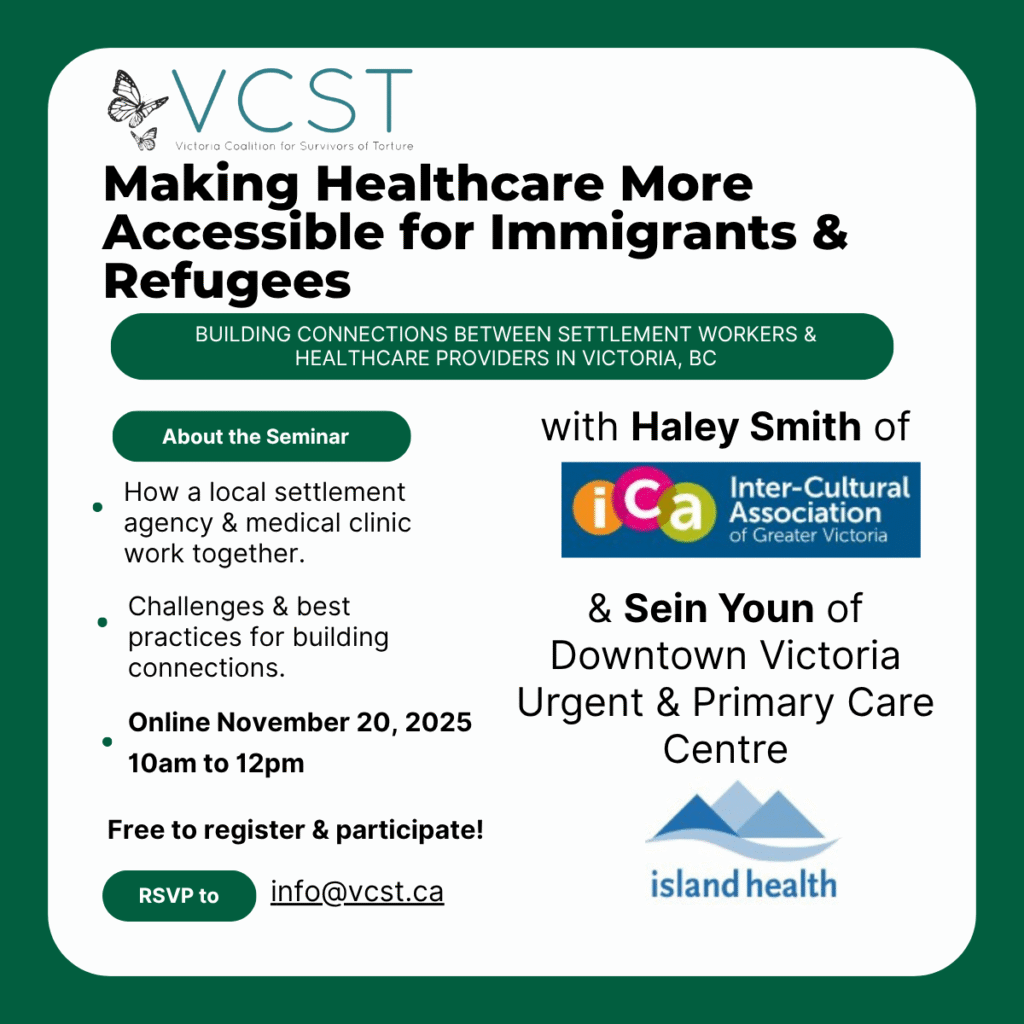
RECAP: Making healthcare more accessible for immigrants & refugees
A review of gaps and best practices in referral systems between settlement and healthcare/counselling agencies.
Funded by the Victoria Foundation

